
Atiba Atobatele made a serious mistake when he refused to re-capture Oyo-ile after the great city was sacked by the Fulanis in 1836. Oyo-ile, the Capital of Oyo Empire was known to Western Historians as Katunga. Katunga was left in ruins for reasons that were varied and interpretative.
Renowned historian and Clergyman, Dr. Samuel Johnson cited Logisitcs, Security and time-lag, all of which stood against such an adventure. Johnson’s historical accounts highlighted displacements, destructions and refugee migrations engineered by the collapse of the Imperial Oyo Authority. Such a precarious situation made a return to Oyo-Ile, a tall dream that only the older generations of Yorubas could have wished into fruition. To the latter generations, Oyo-Ile or Katanga represented a fairy tale.
Why did Atiba, as the most visible survivor of Oyo Princes and a War-Lord choose Ago-Oja as his home? Several reasons connected with points earlier mentioned were responsible. But beyond these, the Alaafin as a potentate wielded considerable influence, power and respect historically conferred his throne. As a Prince-Royal, the pre-eminence of his office in the political scheme of the Yoruba Country, held over hundreds of years, did give the Alaafin, direct and indirect heredity of large swaths of the Yoruba Country.
The unwritten constitution of the Yoruba thus empowered the Alaafin to make a home of anywhere he chose, “ibi gbogbo nile Alaafin” – All lands are the inheritance of Alaafin. Every indication never betrayed the respect and compliance to this imperial authority and recognition which were part of the Institution that his throne represented in the ancient and contemporary history of the Yoruba. Atiba had his formative years in Ajo-Oja and only made periodic visits to Oyo-Ile. His decision to stay in Ajo-Oja was a filial piety, a sacred accord between two childhood friends who trusted each other with their lives.
The two bossom friends (Atiba and Oja) were witnesses to a period of great vicissitudes and existential threats by rampaging Fulani Jihadists to the Yoruba. The destruction of Katunga and the Collapse of Oyo Empire in 1836 meant an all out sweep on a hitherto vast territories of Several Kingdoms with established political systems. The destruction of several towns, cities and villages by the Fulanis unchecked, until the battle of Osogbo in 1842, could have resulted to a complete capitulation of survivors to Fulani Rulers.
Should we forget the Fulani sing-song “To dip the Quran into the sea”? A sing-song that could have replaced all Yoruba Crowned-Heads with Emirs? Yorubaland was saved from extinction by the military intervention of Ibadan and its allied forces, but entered a new phase of realignment and restructuring that dictated a shift in the balance of power among contending authorities in the land. Oyo Empire ceased to exist but the Yorubas held on to its pristine values of tradition, heritage rights, status, hierarchy and political power that regulated relationships among Royal Fathers in the land. The relocation of Oyo-Ile to Ago-Oja and nomenclature change to Ago-Doyo and subsequently to Oyo, can be seen from this large perspective of realignment and restructuring that retained ancient features of Yoruba history rather than discard them.
Oyo of today owe its peaceful existence to the pact between Atiba and Oja; a bossom friend who willingly offered an open, non-discriminative welcome to a Prince-Royal in line with tradition and as an article of faith among the Yorubas. For over Two Hundred (200) years, indigenes of Oyo are in a relationship that has not ruptured the traditional hierarchy and authority of the Alafin as such are reflected in the administrative structure of Oyo Chieftaincy, built around the Oyomesi. Until recent developments, the age-long Institution of King-makers has remained intact. There were few skirmishes in the past but the indigenes have co-habitated in peace.
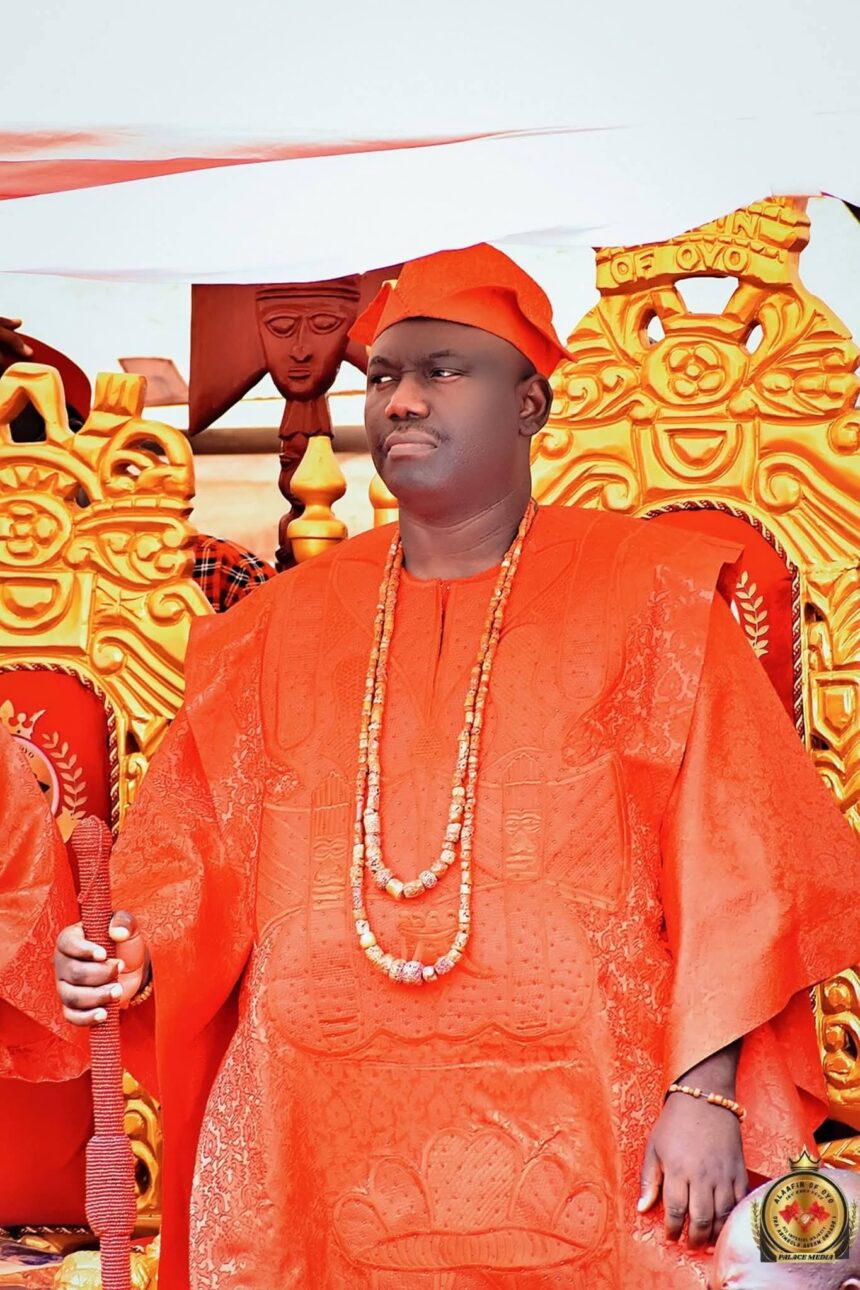
But why is Oyo in the news for stirring reasons? Hakeem Owoade Elewu-Etu 1 was installed Alaafin amidst Controversies engineered among the ranks of the Oyomesi,s some of whom were alledged to have preferred a Rival Candidate (Gbadegesin Siyanbola) for the throne.
In the midst of the brouhaha, Hakeem Owoade was a major beneficiary. The Oyomesi lost out in the power game as Governor Seyi Makinde consulted renowned Ifa-Priest and academic, Professor Wande Abimbola, following allegations that the King makers were compromised. So, fewer people expect the newly installed Alaafin to have problems with Governor Seyi Makinde.
The contest for the stool of Alaafin might be tough but destiny has put Hakeem Owoade on the throne of his forbearers. The writer is not pretentious of the negative fallout of the unsettling developments so soon after the Installation of the Incumbent Alaafin. Controversy after controversy, inclusive of litigations and battle for supremacy have raised a hitherto settled dust and pitched Yorubas against themselves.
It is unfortunate that the two foremost Royal Heads have wittingtly and unwittingly let the chimney billow out smokes of rivalry over hierarchical order and recognition between them. Unrestrained altercations and correspondences were the embers used, to ignite a once dormant fire. It looks as if Yorubas are on war-path again. But this is a needless impasse. Supremacy battle between Alaafin and Ooni is not an attractive choice for the Yorubas in a period of threats to their Unity, existence and well-being. If I were Alaafin Owoade, I will de-emphasise Supremacy tussle with anybody and concentrate on enhancing my domain.
The Alaafin of Oyo can initiate an action programme that will priotise comprehensive intellectual study of the Alaafin Institution as an enduring feature of Yoruba history. An Institution of global standard on production, preservation and upgrading of Yoruba Herbal Medicie is a project worthy of establishing in Oyo. Preserving the archival library the Archival library established by his immediate predecessor and turning the edifice into a tourist centre is also a priority worth pursuing.
Alaafin Owoade is fighting a political battle too many. He should rather keep his amour for a battle of wits that will rekindle interest, love and nostalgia for the pre-eminence of his throne.
It is advisable at this point to tell un-informed pseudo historians and unprofessional bloggers to stop commenting on issues they have little or no knowledge about. Yorubaland deserves harmony for the progress of its peoples instead of drum beats of war which distorted, emotionally slanted writings are promoting on various social media platforms.
Katunga once the capital of a Great Empire is now part of history and is in ruins. But a deft management of the post war history of Oyo Empire is imperative so that what is left of it is not subjected to further impairments.
Olusola Ajiboye is a Veteran Journalist and media Consultant in Osogbo, Osun State, South-West Nigeria.