
Calls for local expertise, stronger research funding, press freedom
The Federal Government has been urged to prioritise investment in satellite technology and indigenous technical expertise as part of efforts to expand digital access, strengthen communication infrastructure and accelerate Nigeria’s sustainable development.
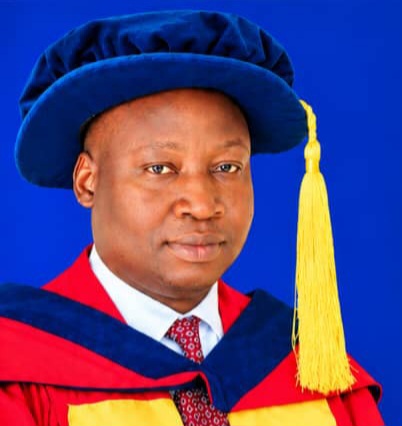
The call was made by a Professor of Journalism and Media Studies at Redeemer’s University, Ede, Osun State, Felix Olajide Talabi, while delivering the university’s 26th Inaugural Lecture on Thursday.
Speaking on the topic, “Episcopacy of Journalism in Academia: From Millennium Development to Sustainable Development Goals in Humanus Directio,” Talabi identified inadequate investment in space technology, expensive broadband services and excessive dependence on foreign technical experts as major challenges limiting Nigeria’s technological advancement.
He argued that Nigeria could not fully harness the developmental opportunities offered by satellite technology without building indigenous capacity to manage and sustain critical communication infrastructure.
“We will want to see an army of satellite experts in this country to make sure that people understand the role of satellite technology in the future of Nigeria,” he said.
The professor also expressed concern over political interference, economic constraints and inconsistent government policies, which he said had continued to undermine the implementation and sustainability of major technological projects.
He observed that political considerations sometimes took precedence over merit in appointments to strategic positions, while inadequate funding weakened the country’s capacity to sustain technological initiatives.
Beyond technological infrastructure, Talabi emphasised the indispensable role of journalism in achieving the United Nations Sustainable Development Goals (SDGs), describing the media as a critical instrument for public enlightenment, accountability, social inclusion and democratic participation.
He explained that responsible journalism could contribute significantly to development by providing citizens with reliable information, exposing governance failures and amplifying the concerns of underserved communities.
According to him, investigative reporting remains particularly important in promoting transparency and good governance, as it brings issues of public interest to the attention of policymakers and the wider society.
He noted that rural communities could also use the media to draw attention to their developmental challenges and demand appropriate government responses.
The don identified several SDGs to which journalism could make meaningful contributions, including good health and well-being, quality education, gender equality, decent work and economic growth, and reduced inequalities.
Citing public health communication as an example, he explained that media coverage of disease outbreaks such as Lassa fever and COVID-19 had helped improve public awareness, while social media advocacy offered opportunities to counter misinformation about vaccination.
On education, Talabi highlighted the contributions of radio, television and other communication platforms in extending learning opportunities to people who might otherwise be excluded from conventional educational systems.
He added that development-oriented media campaigns could stimulate public understanding of economic diversification, innovation and environmental sustainability.
However, he cautioned that the growing influence of social media and artificial intelligence also presented challenges to development, particularly where emerging technologies were deployed to spread misinformation and undermine public trust.
He therefore called for greater professional responsibility among journalists, stressing that accuracy, fairness, balance and the pursuit of truth must remain central to media practice.
The professor further maintained that press freedom and citizens’ access to public information were fundamental requirements for sustainable development and the protection of human rights.
Referencing the Freedom of Information framework, he argued that citizens must have access to relevant government information to participate meaningfully in governance and make informed decisions on issues affecting their lives.
Quoting former United States Supreme Court Justice Hugo Black, who declared that “The press is to serve the governed, not the governors,” Talabi reinforced the need for an independent media capable of holding those in authority accountable.
He recommended sustained government investment in technological infrastructure, research and professional training, alongside policies that would promote indigenous expertise and reduce Nigeria’s dependence on foreign technology.
He also advocated stronger partnerships between universities and media organisations to promote research, innovation and professional development.
Talabi concluded that Nigeria’s quest for sustainable development must go beyond the adoption of modern technology to include responsible journalism, protection of press freedom and an informed citizenry.
He stressed that the media must be empowered to perform its watchdog and developmental responsibilities, maintaining that “Sustainable Development Goals cannot be achieved in the absence of a free press.”